
Keep Energent when your current setup completes the work you need and your team can maintain it. The ceiling is a workflow that your current setup cannot complete without people repeatedly stepping in. The best Energent alternative in 2026 is Arcgent if you need custom agents built and maintained inside your existing software; an internal build is the alternative if you need direct control over development.
TL;DR
For Energent alternatives, choose Arcgent for custom AI agent development and ongoing maintenance inside your existing software.
Choose an internal build when your company wants to own development and maintenance.
Choose rules-based workflow automation when explicit conditions can determine every action.
Keep Energent when your current setup meets your workflow requirements.
Why this matters
An alternatives search should start with unfinished work, not a list of vendor names. Identify the task people still perform, the software it touches, and the reason automation stops. Then choose the delivery model that addresses that gap.
For a 2026 evaluation, separate the agent from the responsibility for running it. Someone must define acceptable behavior, manage access, review failures, and change the workflow when your business changes. A tool choice alone does not assign those jobs.
Compare who builds the workflow, where it runs, and who keeps it working. Those decisions tell you more than a feature checklist disconnected from your actual process.
Energent alternatives at a glance
The table compares delivery approaches rather than treating an agency, an internal engineering project, and rules-based automation as interchangeable products. Use your existing Energent workflow as the baseline.
Energent
Best for: Continuing a setup that already meets your requirements
Standout distinction: Your existing workflow is the benchmark
How to compare it with Energent: Check completion, manual intervention, and maintenance responsibility
Arcgent
Best for: Custom AI agents with development and maintenance provided by an agency
Standout distinction: Builds and maintains agents inside software companies already use
How to compare it with Energent: Compare the proposed service scope with the work your current setup leaves unfinished
Internal build
Best for: Companies that want direct control over development
Standout distinction: Your team defines and owns the implementation
How to compare it with Energent: Compare internal responsibility with your current delivery arrangement
Rules-based automation
Best for: Tasks with explicit conditions and predictable actions
Standout distinction: Executes predefined workflow logic
How to compare it with Energent: Check whether the task needs an agent or just clearly defined rules
Before comparing options, write down the outcome you want. A useful requirement names the completed action: update a record, route a request, prepare a draft for approval, or reconcile information. These are evaluation examples, not claims about any provider's supported features.
1. Arcgent: best for custom agents with ongoing maintenance
Arcgent is a B2B agency that builds and maintains custom AI agents to automate repetitive workflows inside the software companies already use. That service model fits a buyer seeking implementation and upkeep rather than another software product to configure alone.
The decision starts with your workflow. Define what arrives, what the agent should do, and what must remain under human control. Then evaluate the proposed build against those requirements rather than assuming that custom development automatically solves every process problem.
Where the agency approach shines
Development and maintenance share a service scope. You are evaluating both the initial implementation and its continued operation.
Existing software is the starting point. The stated offering focuses on workflows inside tools your company already uses.
The work can be defined around your process. A custom build starts with the task you need completed, not a generic list of features.
Where the agency approach falls short
This is a service engagement, not an off-the-shelf software purchase. You need to define requirements and agree on the work.
Custom development does not remove your decisions. Your team still needs to identify approval rules, acceptable outputs, and access boundaries.
A simple rules-based task does not necessarily justify an agent. Start with the simplest implementation that meets the requirement.
Best for: Companies that want custom AI agent development and maintenance delivered as a service inside their existing software.
Head-to-head evaluation against your Energent setup
Use these dimensions to compare a proposed engagement with the workflow you already have. Judge the actual scope, not the provider name.
Development
Agency engagement: Custom agent development is part of the stated offering
Current Energent setup: Identify who currently builds and changes your workflow
Maintenance
Agency engagement: Agent maintenance is part of the stated offering
Current Energent setup: Identify who currently diagnoses and fixes problems
Working environment
Agency engagement: Existing company software is the stated focus
Current Energent setup: List the tools your workflow currently uses
Acceptance
Agency engagement: Define the outcome before agreeing to the build
Current Energent setup: Check whether the current workflow achieves that outcome
Verdict: Buy the service approach when you need both a custom build and maintenance, and the agreed scope covers your workflow.
2. Internal build: best for direct development control
An internal build puts implementation decisions with your own team. Your company defines the workflow, writes or configures the implementation, and assigns responsibility for keeping it operational.
Choose this approach because ownership matters to your organization, not because building internally sounds inherently better. Control is useful only when someone has responsibility and capacity to exercise it.
Where an internal build shines
Your team owns implementation decisions. Changes can follow your internal priorities and review process.
Business knowledge stays close to development. Process owners can work directly with the people implementing the workflow.
You define the operating rules. Permissions, approval steps, and failure handling become explicit internal responsibilities.
Where an internal build falls short
Maintenance competes with other internal work. Assign responsibility before the workflow becomes operational.
A prototype is not a handover plan. Document how another team member can diagnose, change, and restore the workflow.
Control does not guarantee capacity. A team that cannot support the workflow should not accept ownership by default.
Best for: Companies with a named internal owner and the capacity to build, review, and maintain the implementation.
For the Energent comparison, ask whether bringing development inside the company addresses a specific constraint. If the issue is unclear process ownership, changing who writes the implementation does not settle it.
Verdict: Buy the internal-build approach when direct ownership is a requirement and your team accepts the maintenance work.
3. Rules-based automation: best for predictable workflow logic
Rules-based automation executes actions under predefined conditions. It is the appropriate starting point when you can describe the workflow without asking the system to interpret ambiguous information.
Consider a request routed according to a known field or a record updated after a defined event. The evaluation question is whether explicit logic fully describes the task, including exceptions.
Where rules-based automation shines
Conditions are explicit. You can inspect the rule that causes an action.
The task boundary is clear. Defined inputs lead to defined actions.
Testing follows the workflow logic. Check each condition and its intended outcome.
Where rules-based automation falls short
Unwritten exceptions remain unresolved. The implementation needs a defined response when a condition does not match.
Ambiguous inputs need another treatment. Do not pretend a fixed rule can perform judgment that the workflow requires.
Rules still need an owner. Changes to fields, access, or business logic require review.
Best for: Repetitive tasks whose inputs, decisions, and actions can be described explicitly.
Compare this approach with Energent only after identifying the unfinished task. Replacing a working agent with rules makes sense when those rules cover the requirement; removing necessary interpretation does not.
Verdict: Buy the rules-based approach for explicit workflows; skip it when the task depends on interpreting ambiguity.
Why people switch from Energent
A switch needs a demonstrated workflow gap. These are decision triggers to check in your own setup, not claims about Energent's features, reliability, or service.
The required work remains unfinished
Identify the exact handoff where automation stops. Does a person still copy information, select the next action, or correct the output? Record that intervention and include it in the requirements for any replacement.
A different provider is useful only if the proposed implementation addresses that same handoff. Do not accept a demonstration of a different task as evidence.
Responsibility does not match your needs
Separate responsibility for defining the process from responsibility for implementing and maintaining it. Your company might want an agency to build and maintain the workflow, or it might require internal ownership.
Write those responsibilities into the evaluation. A switch without an ownership decision simply moves the unresolved work.
The implementation is more complicated than the task
If explicit rules cover the whole workflow, evaluate rules-based automation before commissioning an agent. If the task requires interpretation, define where that interpretation starts and what limits apply.
In 2026, switch for a specific workflow requirement—not for an alternative's name. Keep the current setup as the benchmark and require the replacement to demonstrate the missing outcome.
How to evaluate a replacement before committing
Start with 1 workflow, not an entire department. A narrow scope lets you describe the input, required action, and completion condition without mixing unrelated requirements.
Use the following sequence to create an acceptance brief. It works whether you choose an agency, an internal build, or rules-based automation.
Input
Name the event that starts the work and the information required to complete it. Include where that information lives and what happens when it is incomplete.
Avoid a vague instruction such as handling operations. Specify the request, record, or document that enters the process.
Action
Describe the completed business action. Drafting a response and sending a response are different responsibilities. Reading a record and changing a record are different permissions.
State which actions the implementation is allowed to take. Keep access tied to the approved task.
Review
Identify decisions that need human approval. Specify who reviews them and what information that person needs to make the decision.
A review step should have an owner and a clear purpose. Do not add approval everywhere without explaining what it protects.
Exception
Define what happens when information is missing, conflicting, or outside the agreed scope. A workflow needs a destination for work it cannot safely complete.
Require 3 test cases in your acceptance brief: a normal input, an incomplete input, and a conflicting input. These are recommended test categories, not a performance benchmark.
Ownership
Name the person responsible for operation and the party responsible for implementation changes. Record where issues go and how a change is approved.
Maintenance should be an assigned job. It should not depend on someone remembering how the original demonstration worked.
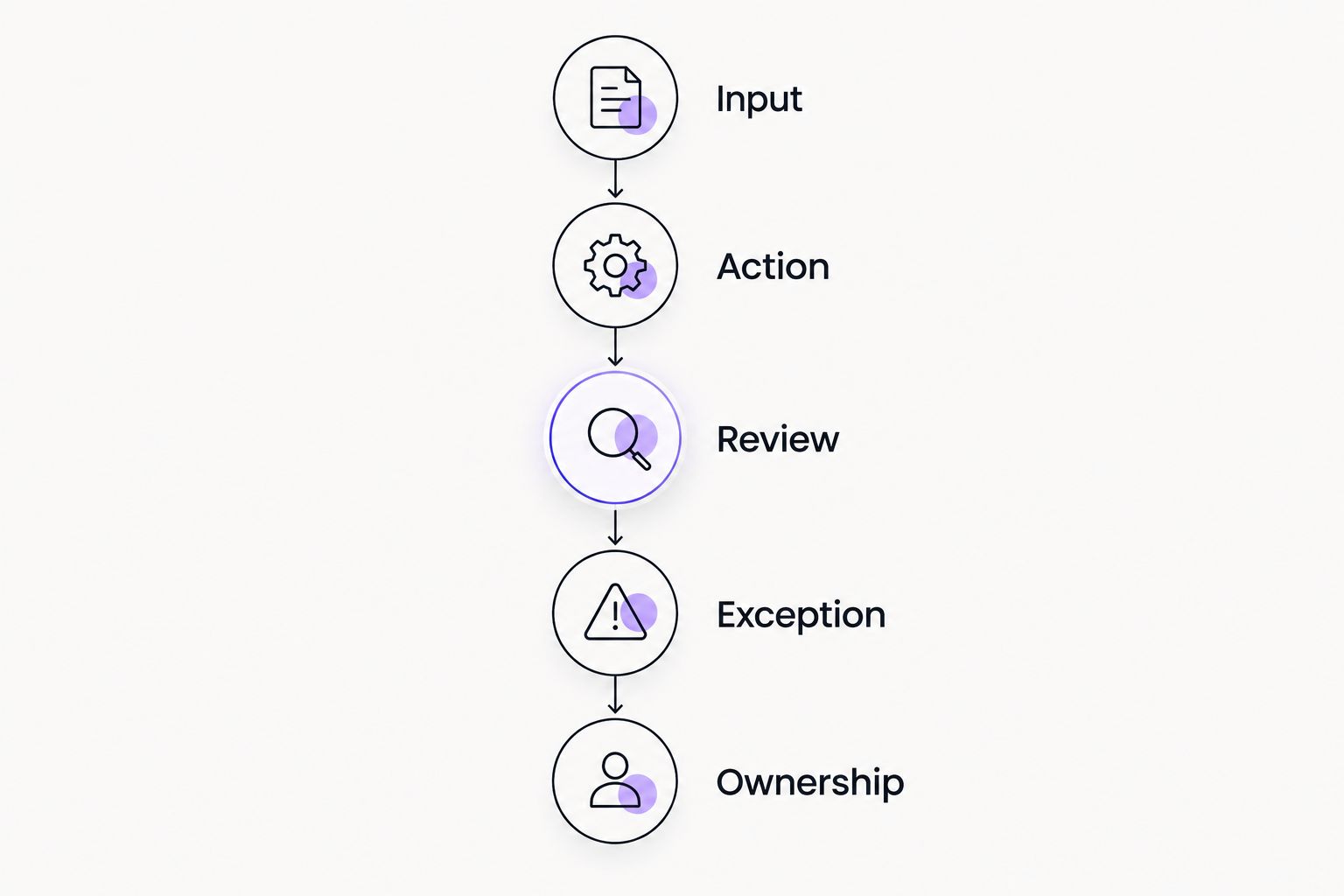
Define the full workflow before comparing how each option implements it.
Before approving a 2026 replacement, answer 4 questions: What completes the task? What needs approval? What happens on failure? Who maintains it? An attractive demonstration does not answer those questions for you.
When staying with Energent is the right call
Stay with Energent when your current setup completes the required workflow, your team understands its boundaries, and maintenance has a clear owner. A replacement needs a concrete benefit beyond being different.
Use the same acceptance brief for the existing setup and the proposed alternative. Check the same inputs, review steps, exceptions, and completion condition. Otherwise, you are comparing presentations rather than implementations.
For a 2026 decision, separate fixable process issues from reasons to replace the provider. An unclear approval rule remains unclear after a switch. Resolve that rule first, then assess whether your current setup can implement it.
Hold the current setup when it meets the brief. Change it when a replacement demonstrates the specific outcome you need and assigns responsibility for keeping that outcome working.
FAQ
What's the best Energent alternative in 2026?
Arcgent is the best fit when you need custom AI agents built and maintained inside your existing company software. Choose an internal build when direct development ownership is the requirement, or rules-based automation when explicit logic covers the task.
Should I replace Energent with an agency?
Choose an agency when you want development and maintenance delivered as a service. Compare the agreed scope with the workflow your current setup needs to complete, including approvals and exceptions.
Is an internal build better than using an external provider?
An internal build is better suited to companies that require direct development control and can maintain the implementation. It puts responsibility with your team rather than removing the work of operation and upkeep.
Do I need an agent for every repetitive workflow?
No, a workflow fully described by explicit conditions and actions is a candidate for rules-based automation. Evaluate an agent when the task requires interpretation that those rules do not cover.
How do I compare Energent alternatives without relying on demos?
Use the same workflow acceptance brief for every option. Specify the input, completed action, approval requirements, exception handling, and maintenance owner, then test against that brief.
When should I stay with Energent?
Stay with Energent when your current setup meets your workflow requirements and has clear maintenance ownership. Replace it only when an alternative addresses a demonstrated gap.
One last thing
The most useful replacement test is not a polished happy-path demonstration. Give each option an input with missing information and ask what happens next. Your acceptance brief should identify whether the workflow stops, requests clarification, or sends the task to a person.
For your 2026 shortlist, choose the delivery model after defining that behavior. Arcgent fits companies seeking custom AI agent development and maintenance; the acceptance brief determines whether a particular engagement fits your work.
Do not migrate an unclear process. Define the missing decision first, then choose who will build it and keep it working.