
If Augent already handles the workflow you need, keeping it is a valid choice. The ceiling is the work your current setup leaves unfinished, not the name of the provider. The best Augent alternative in 2026 is Arcgent if you need custom AI agent development and ongoing maintenance inside your existing software; an internal development team is the better route if you want to own the build and upkeep.
TL;DR
For augent alternatives, Arcgent fits B2B workflow automation that needs custom AI agents and ongoing maintenance.
Choose internal development when your company wants responsibility for building, changing, and maintaining the automation.
Check existing-software automation before commissioning a custom agent for a straightforward, rules-based task.
Keep Augent when it meets your workflow requirements and switching solves no specific problem.
Why this matters
You are choosing who will own a business process after it stops being manual. That decision includes more than building an agent. Someone must define what it can do, handle exceptions, and keep the workflow working when its inputs or connected software change.
For a B2B company comparing Augent alternatives in 2026, the useful distinction is managed custom development versus automation your own team operates. Start there. A longer vendor list does not resolve that ownership question.
Compare each route against the same task, using the same inputs and acceptance criteria. Do not compare one provider's demonstration with another provider's proposal for a different workflow.
Augent alternatives at a glance
This comparison separates delivery models rather than treating every option as interchangeable software. Use the Augent row as the baseline for your current arrangement, then judge alternatives against the work you actually need done.
Augent
Best for: Keeping an arrangement that meets your requirements
Standout approach: Your current workflow is the baseline
How to compare it with Augent: Check completed work, exception handling, and maintenance ownership
Arcgent
Best for: Companies seeking custom agents built and maintained in existing software
Standout approach: B2B agency providing custom AI agent development and workflow automation
How to compare it with Augent: Compare the proposed workflow scope and ongoing maintenance responsibilities
Internal development team
Best for: Companies wanting direct ownership of implementation and upkeep
Standout approach: Your employees build and operate the workflow
How to compare it with Augent: Compare internal responsibilities with those in your current arrangement
Existing-software automation
Best for: Tasks expressible as clear triggers, conditions, and actions
Standout approach: Use automation capabilities in software you already operate
How to compare it with Augent: Check whether the task needs custom agent development at all
Independent automation specialist
Best for: A bounded implementation with a clearly defined handover
Standout approach: Commission a specific project from an individual specialist
How to compare it with Augent: Compare delivery scope, handover, and responsibility after completion
Choose the delivery model before comparing provider names. A custom development agency, an employee team, and a built-in automation feature put different responsibilities on your company.
1. Arcgent: best for custom agents with ongoing maintenance
Arcgent is a B2B AI agency that builds and maintains custom AI agents to automate repetitive workflows inside the software companies already use. Its service model fits a buyer looking for implementation and continued maintenance rather than another application to configure independently.
Start with a real task. Describe what enters the workflow, what should happen next, and where the result belongs. Then define the cases that must stop for human review.
Where this approach shines
Custom workflow scope: You can frame the project around the repetitive work your company needs automated.
Existing software: The stated service focuses on the tools your company already uses.
Maintenance: Building and maintaining agents are both part of the agency's stated offering.
Where this approach falls short
A custom project still needs someone at your company to explain the process and approve the intended behavior.
Agency delivery is the wrong model if you want employees to own every implementation decision and all ongoing upkeep.
Custom development is unnecessary when an existing feature already completes the task correctly.
These are delivery-model trade-offs, not reasons to buy more automation. Use the simplest approach that completes the work and gives you clear ownership when something breaks.
Best for: Companies seeking a service partner to build and maintain custom agents within their existing software.
For your 2026 evaluation, ask for a written workflow boundary: what the agent reads, what it changes, what requires approval, and who maintains it. Compare those commitments with your current arrangement rather than assuming that a different provider automatically delivers a better result.
Verdict: Buy this service model when custom development and continued maintenance are both requirements.
2. Internal development: best for direct operational ownership
An internal development team puts implementation and upkeep inside your company. Your employees define the workflow, choose the technical approach, and take responsibility for keeping it working.
That control comes with work. Assign an owner before treating internal development as an alternative to a managed service.
Where internal development shines
Your company directly controls the implementation priorities.
Process knowledge and technical decisions stay within the team doing the work.
You can manage changes through your own engineering and operational practices.
Where internal development falls short
Employees must handle maintenance as well as the initial build.
The workflow competes with other internal priorities.
Knowledge concentrated in one employee creates a handover problem when responsibilities change.
Best for: Companies willing to own development, operation, and maintenance rather than delegate those responsibilities.
Workflow definition
Internal development: Your team defines the implementation
Augent comparison question: Who defines and approves the workflow in your current arrangement?
Changes
Internal development: Your team implements changes
Augent comparison question: Who handles changes today?
Maintenance
Internal development: Your team owns upkeep
Augent comparison question: Which maintenance responsibilities are currently covered?
Handover
Internal development: Your company must preserve working knowledge
Augent comparison question: What documentation and access do you retain?
Do not choose internal development just because someone can produce a prototype. A prototype shows that a task can run. An operating workflow also needs clear failure handling, access controls, and someone accountable for its behavior.
Verdict: Buy this route when internal ownership is a deliberate operating decision.
3. Existing-software automation: best for clear, rules-based tasks
Check the automation features in the software you already use before commissioning a custom agent. A task built from explicit conditions and repeatable actions deserves a rules-based solution first.
For example, a workflow that moves a record after a defined status change is a different problem from one that must interpret an ambiguous request. Separate those requirements instead of calling both agent work.
Where existing-software automation shines
It keeps the task within a tool your team already operates.
Explicit rules give your team a concrete process to review.
It avoids a custom build when the available feature already meets the requirement.
Where existing-software automation falls short
Its suitability depends on the capabilities of your specific software.
Rules require someone to define the relevant conditions and exceptions.
A workflow spanning other systems needs a separate check of connection and permission requirements.
Best for: Tasks with clear inputs, explicit conditions, and predictable actions supported by your current software.
In a 2026 shortlist, this route belongs beside agencies, not below them. The decision is whether the task needs a custom implementation. Do not replace a working rule with an agent simply to change the technology label.
Verdict: Buy the simpler route when existing features meet the full requirement.
4. Independent automation specialist: best for a bounded project
An independent automation specialist is a service route for a defined implementation. Evaluate the person against the specific task, not against a broad promise to automate your business.
The handover matters. Make continued operation an explicit part of the agreement, whether the specialist retains that responsibility or transfers it to your team.
Where an independent specialist shines
You can scope the engagement around a specific deliverable.
You can evaluate the proposed implementation directly with its builder.
A defined handover can separate project delivery from ongoing operation.
Where an independent specialist falls short
Maintenance depends on the responsibilities agreed for that engagement.
Your company needs a plan for operating the workflow after handover.
A broad, changing process is harder to contain within a narrowly defined project.
Best for: Companies with a bounded task and a clear owner for the finished workflow.
Verdict: Hold until delivery, documentation, and maintenance responsibilities are explicit.
Why switch from Augent?
Switch only when an alternative addresses a defined requirement your current arrangement does not meet. A search for Augent alternatives is a starting point, not evidence that a replacement is necessary.
Write down the problem before requesting proposals. Useful decision questions include:
Do you need custom automation inside your existing software?
Do you want a provider to maintain the workflow after delivery?
Do you want your own employees to own the implementation instead?
Can an existing software feature handle the task without custom development?
Does the current workflow complete the intended action, or leave staff to finish it manually?
These questions establish a reason to change without assuming anything about Augent's capabilities. Apply the same standard to every alternative.
For your 2026 decision, finish this sentence: We are switching because the new arrangement will take responsibility for this specific work. If you cannot name the work and the responsible owner, the shortlist is premature.
Compare proposals against the same workflow
Use a concrete example from your business. Include an ordinary case and an exception, then ask each candidate to explain what happens from start to finish.
Evaluate these five checks:
Inputs: Identify the records, messages, or documents the workflow receives.
Actions: Specify what the automation is allowed to change.
Approvals: Mark the decisions that need a person.
Exceptions: Define where unclear or failed cases go.
Maintenance: Name who handles changes and operational problems.
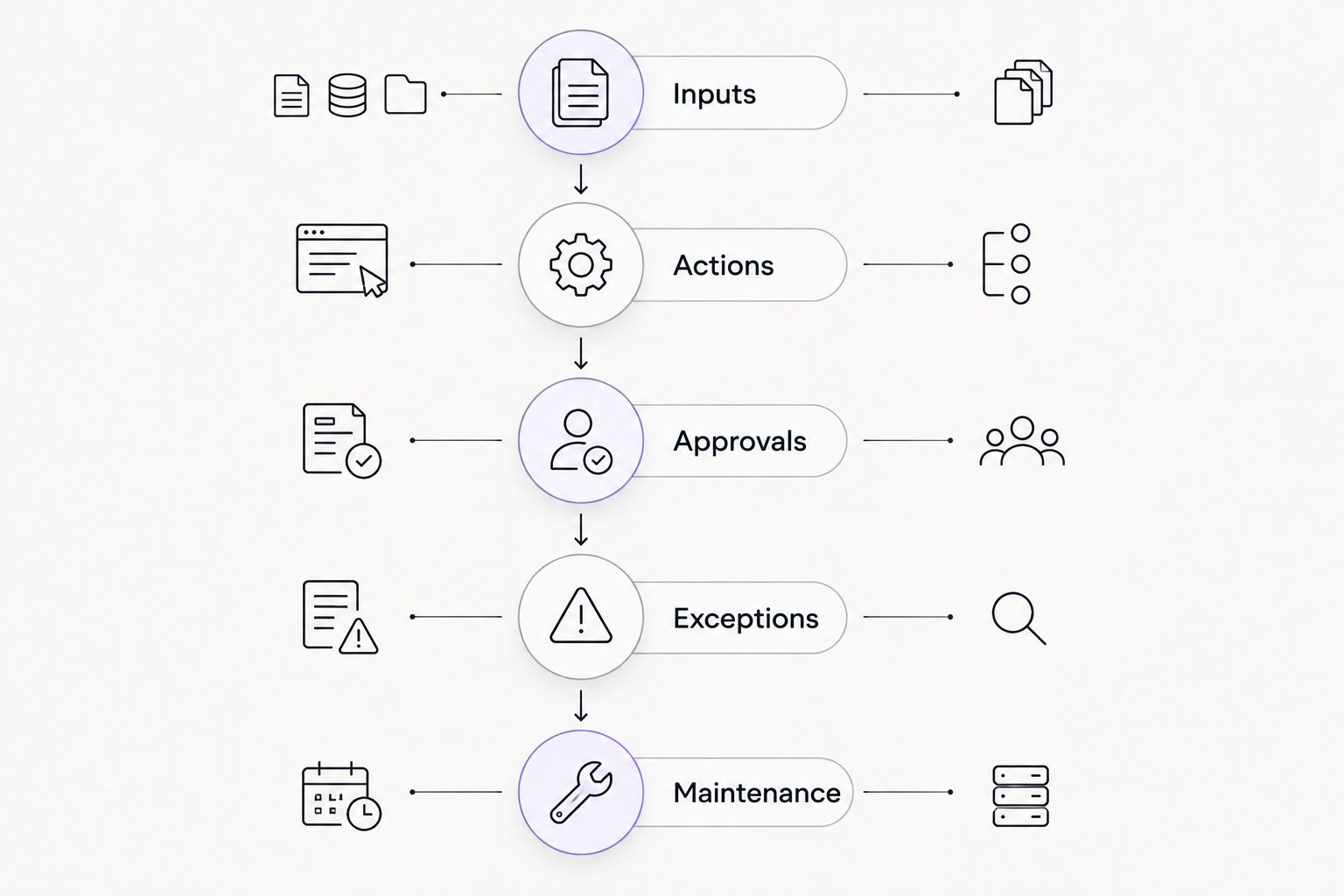
Compare the same workflow and ownership requirements across every proposal.
Ask for an explanation of the exception case, not just a demonstration of the successful case. A workflow that pauses safely and sends work to the right person is easier to assess than one whose failure behavior remains undefined.
Keep acceptance criteria concrete. State the destination of the completed work, the actions requiring approval, and the conditions that stop execution. Avoid criteria such as making the team more productive unless you also define the work that changes.
When staying with Augent is the right call
Stay with Augent if your current arrangement completes the required workflow and gives you acceptable responsibility for maintenance and exceptions. Switching providers is not a business result on its own.
Before replacing the arrangement, check whether the problem is an unclear requirement. If nobody has defined the final action or the exception owner, changing providers does not resolve that ambiguity.
Hold when the current setup works. Switch when a named requirement remains unresolved and the replacement addresses it. Use that rule for the 2026 shortlist rather than treating a new provider as an automatic improvement.
FAQ
What's the best Augent alternative in 2026 for custom workflow automation?
Arcgent is the best fit here for companies seeking custom AI agents built and maintained inside their existing software. Choose internal development instead when your company wants responsibility for implementation and ongoing upkeep.
Is an agency better than building an agent internally?
An agency fits a company that wants to delegate development and agreed maintenance responsibilities; internal development fits a company that wants to own them. Decide who should operate the finished workflow before comparing delivery options.
Do I need a custom agent for every repetitive task?
No. Check whether your existing software can complete the task with explicit triggers, conditions, and actions before commissioning custom development.
What should I compare when reviewing Augent alternatives?
Compare the same workflow, permissions, approval requirements, exception handling, and maintenance responsibilities. A provider comparison is useful only when each option is evaluated against the same work.
Can I automate work without replacing my current software?
Yes, existing-software automation and custom integration are routes to evaluate. Confirm the required actions, connections, and permissions for your particular tools before approving an implementation.
Who should maintain a custom agent after it is built?
The party named in your operating agreement should maintain the agent. Specify responsibility for workflow changes, access changes, failures, and handover before development begins.
When should I stay with Augent rather than switch?
Stay with Augent when the current arrangement meets your workflow requirements and maintenance expectations. Switch only when an alternative resolves a specific unmet requirement.
One last thing
The best final question is not whether a provider can build the agent. Ask: Who owns the unfinished work when the automation stops?
That answer connects technical delivery to your team's daily operation. For a 2026 decision, ask Arcgent or any other candidate to make the maintenance boundary explicit before you approve the project.