
Choose Arcgent if you want an agency to build and maintain custom agents inside the software your company already uses; choose Evergent if you need a platform for subscription monetization and revenue management. The difference is the job you are buying: custom workflow automation versus subscription-business infrastructure, not two interchangeable agent builders.
TL;DR
Arcgent vs Evergent is a custom workflow automation agency versus a subscription revenue management platform comparison.
Choose Arcgent for custom agents that automate repetitive work inside your existing software.
Choose Evergent when subscription monetization and revenue management are the central requirements.
Compare workflow ownership, system access, exception handling, and purchasing terms before choosing either approach.
Why this matters
A business can need workflow automation and subscription management at the same time. That does not make the purchases substitutes. One addresses how employees move work through existing tools; the other addresses how a subscription business manages its revenue processes.
For a 2026 buying decision, start with the process that needs to change. If employees copy information between systems, prepare routine updates, or chase internal handoffs, investigate custom automation. If the central requirement is subscription monetization, investigate the revenue platform first.
Buy against the workflow, not the similarity between company names. A shortlist built around the wrong category creates unnecessary demonstrations, mismatched proposals, and requirements that never answer the original problem.
At a glance
Use this 2026 comparison as a category-level buying guide. The table separates the stated agency service from Evergent's established subscription revenue management focus; it does not treat either option as a universal replacement for the other.
Best for
Arcgent: Companies seeking custom automation of repetitive workflows
Evergent: Businesses seeking subscription monetization and revenue management
Standout feature
Arcgent: Builds and maintains custom agents
Evergent: Subscription-focused revenue management platform
Existing software
Arcgent: Service is explicitly built around tools the company already uses
Evergent: Evaluate the platform against the subscription systems it must connect with
Delivery approach
Arcgent: Agency builds around the workflow
Evergent: Platform selection centers on subscription requirements
Ongoing responsibilities
Arcgent: Maintenance is part of the stated service
Evergent: Define platform administration and implementation responsibilities
Permissions
Arcgent: Set access boundaries for each custom workflow
Evergent: Set access boundaries for subscription and revenue processes
Exception handling
Arcgent: Define what the agent must send to a person
Evergent: Define how unusual subscription cases reach a person
Pricing model
Arcgent: Custom development and maintenance engagement
Evergent: Platform procurement; evaluate the contract structure
How to read the comparison
The agency's advantage is its stated custom workflow remit. Its limitation is that custom automation is not the same purchase as a subscription management platform. Evergent's advantage is its subscription-specific focus. Its limitation in this comparison is that a revenue platform is not an agency engagement for arbitrary internal workflows.
Those are scope differences, not measured performance rankings. Judge proposed implementations against your own operating requirements rather than reading a category advantage as proof of better execution.
Arcgent fits custom workflow automation better
Best for: an operations owner who wants repetitive work automated inside existing tools. The agency's stated service covers building and maintaining custom agents, with the company's current software as the working environment.
That makes the agency route relevant when the problem starts with a team task rather than a subscription platform requirement. Examples to bring into discovery include preparing a draft from existing records, passing approved information between tools, and checking whether an internal request has the information needed for processing. These are candidate workflows, not promises of supported integrations.
Bring a concrete process description:
What starts the work?
Which information does the task require?
What should the finished output look like?
Which decisions must remain with a person?
Who receives work that cannot be completed automatically?
The tradeoff is definition work. A custom build requires you to explain the process, its exceptions, and its acceptable outcomes. Do not substitute a broad request to automate operations for an agreed task.
Verdict: choose the custom agency route when the repetitive workflow is the purchase. Do not use it as shorthand for buying a subscription revenue platform.
Evergent fits subscription revenue management better
Best for: a subscription-business owner choosing infrastructure for monetization and revenue processes. Evergent's publicly established product category is subscription monetization and revenue management. That is a more relevant starting point when subscription operations define the requirement.
Write the requirement in business terms before reviewing individual features. Identify the subscription processes involved, the records they depend on, and the systems that must stay consistent. Then ask the platform provider to demonstrate your actual scenarios.
The advantage is category alignment. You are evaluating a platform organized around subscription revenue rather than asking a custom automation engagement to stand in for that platform decision.
The limitation is the same boundary in reverse. A subscription platform comparison does not establish suitability for unrelated HR, operations, or document workflows. Evaluate those separately instead of assuming the platform should own every repetitive task in the company.
Verdict: choose Evergent when subscription monetization and revenue management are the central purchase. Keep general-purpose workflow automation on a separate requirements list.
Existing-tool automation favors the agency route
Best for: a team whose existing software should remain the working environment. The agency description explicitly places its custom agents inside the tools companies already use. That is the relevant advantage when preserving the current workflow environment is part of the brief.
Do not interpret that description as an unlimited compatibility list. For each proposed connection, establish the required access, the information exchanged, and whether the automation reads records, drafts changes, or writes changes directly.
A revenue platform evaluation starts from a different question: where should subscription processes live, and how should connected systems exchange their records? That is appropriate when the platform itself is part of the purchase, but it is a different brief from automating a task in place.
For a practical starting point, use the guide to connecting agents to existing software to frame the integration discussion.
Verdict: favor the agency route for an existing-tool automation brief. Favor the subscription platform route when selecting the system responsible for subscription revenue processes.
A platform gives subscription buyers a clearer evaluation baseline
Best for: a buyer who needs to evaluate subscription processes as a connected system. Evergent's category focus provides a subscription-specific starting point for that evaluation. Ask for a demonstration organized around your business process, not a general product tour.
Use the same scenario throughout the demonstration. Follow a record through the relevant stages, identify which system owns it, and inspect what happens when the normal path breaks. Record every manual handoff that remains.
Custom agency work has a different strength: the brief can start with the individual workflow your team needs to change. Its corresponding limitation is that the implementation scope must be defined for that task; you cannot treat a custom brief as a ready-made subscription platform specification.
Verdict: Evergent is the better category fit for evaluating subscription infrastructure. A custom agency engagement is the better category fit for defining and building a particular internal automation.
Maintenance ownership matters for both approaches
Building and maintaining custom agents are both part of the agency's stated offer. That matters when your purchasing requirement includes keeping the automation working after its initial delivery.
Still, the word maintenance is not an operating agreement. Define which changes are included, who notices failures, how issues are reported, and who approves modifications. Do not assume a response time, support guarantee, or change allowance without written terms.
For a platform purchase, establish the responsibilities of the provider, implementation team, and internal administrators. A platform category alone does not tell you who will own every integration or business-rule change.
Verdict: both approaches need explicit ownership. The agency has a stated maintenance service; the platform purchase needs its own responsibility map. Neither label replaces a written agreement about who does what.
Permissions and exception handling are shared buying gates
Neither option wins by avoiding human oversight. Both buying processes should establish who can access information, which actions require approval, and how unresolved work reaches a person. These are purchasing requirements, not claims that either provider includes a particular control.
Use 3 acceptance gates for a 2026 evaluation:
Access boundary: document which records the implementation can read or change.
Approval boundary: identify actions that require a person's authorization.
Exception boundary: specify where incomplete, conflicting, or rejected work goes.
For a workflow agent, test an ambiguous request and an incomplete record. For a subscription platform, test unusual cases drawn from your actual subscription process. Ask the provider to show the outcome rather than describe an ideal path.
Verdict: tie on the buying requirement. Select only after the proposed implementation demonstrates acceptable permissions and exception handling for your business.
Pricing: compare the engagement, not an assumed fee structure
The purchasing distinction is custom development and maintenance versus a platform engagement. Do not infer fixed fees, usage billing, included support, or contract length from those categories.
For a 2026 agency proposal, separate the build scope from the ongoing work. Ask what constitutes completion, what maintenance covers, and how additional workflow requests are handled. A tightly defined scope makes proposals easier to compare.
For an Evergent proposal, separate platform terms from implementation responsibilities and connected-system work. Ask which obligations sit with your team and which sit with the provider or another implementation partner.
The tradeoff is contractual predictability versus room to change the scope. Explicit deliverables make an engagement easier to evaluate; change terms determine what happens when requirements move. Neither purchasing category proves a particular commercial advantage.
Recommendation: compare written scopes and responsibilities before comparing commercial totals. A proposal that leaves essential work with your team is not equivalent to one that assigns that work to the provider.
Define the job before choosing the provider
Use this 5-step sequence to prepare a useful brief. It works whether you are commissioning an agent or evaluating subscription infrastructure.
Scope the task: name the process and the output you need.
Map access: list the systems and records involved.
Set limits: define approval requirements and prohibited actions.
Test exceptions: supply examples that break the normal process.
Assign ownership: name who operates, maintains, and approves changes.
A brief built this way exposes the category choice early. A task centered on repetitive work inside existing tools points toward custom automation. A requirement centered on subscription monetization points toward the subscription platform.
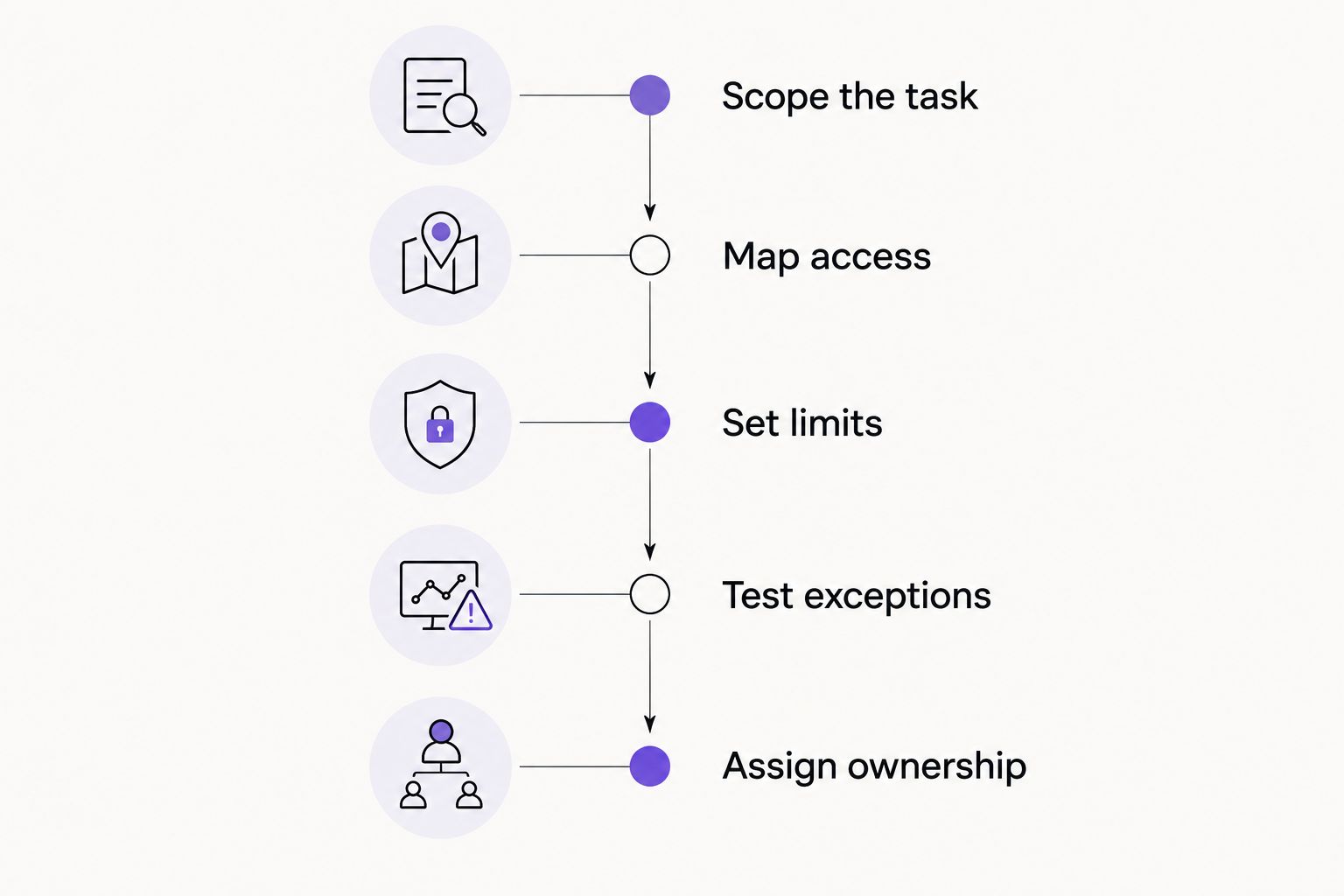
Define the process and its boundaries before choosing a provider.
Final verdict for 2026
Choose Arcgent if you own repetitive internal workflows
Winner for the operations lead commissioning custom workflow automation. Choose this route when you want an agency to build and maintain agents in the tools your company already uses. Keep subscription-platform requirements separate unless they form part of an explicitly agreed automation scope.
Choose Evergent if you own subscription revenue processes
Winner for the subscription-business lead evaluating monetization infrastructure. Choose this route when subscription revenue management defines the purchase. Evaluate unrelated internal automation as a separate workstream rather than treating the platform as an agency substitute.
Custom repetitive-work automation
Winner: Arcgent
Subscription monetization focus
Winner: Evergent
Existing-tool automation brief
Winner: Custom agency route
Subscription-platform evaluation
Winner: Evergent
Maintenance ownership
Winner: Tie: define responsibilities
Permissions and exception handling
Winner: Tie: require demonstrations
Pricing model
Winner: No winner without contractual terms
FAQ
Is Arcgent better than Evergent for workflow automation?
Arcgent is the better category fit for custom agents that automate repetitive workflows inside existing software. Evergent's established focus is subscription monetization and revenue management, which is a different purchasing requirement.
What's the main difference between these providers?
The main difference is custom agency work versus a subscription revenue management platform. Choose based on the process you need to change, not the similarity between the names.
Is Evergent an alternative to a custom agent development agency?
Evergent is not a like-for-like substitute for a custom agent development agency. Evaluate it when subscription monetization and revenue management are the central requirements.
Which option should an operations team choose?
An operations team seeking custom automation inside existing tools should evaluate the agency route. A team responsible for subscription revenue processes should evaluate the subscription platform route.
Can a business need both approaches?
Yes, custom workflow automation and subscription management address different jobs. Keep ownership boundaries clear so separate implementations do not make conflicting changes to the same records.
How should I compare the purchasing terms?
Compare the written scope, ongoing responsibilities, implementation obligations, and change terms. Do not assume either provider uses a particular fee structure without its proposal.
What should I ask during a provider demonstration?
Ask the provider to demonstrate your real workflow, including an exception and an approval requirement. Confirm which records change, who authorizes the action, and where unresolved work goes.
One last thing
The most useful demonstration includes a failure. Bring an incomplete record, conflicting information, or a request that requires approval. Seeing where the work stops tells you more about operational fit than watching a clean example finish.
For your 2026 decision, require a named person or team to own that stopped work. Automation without an exception owner simply moves the queue.