
Evergent handles subscription billing and revenue management; the ceiling is a different requirement: automating repetitive work across the software your team already uses. Among Evergent alternatives in 2026, Arcgent is the best fit for custom workflow automation without replacing your billing platform; Zuora is the better-fit candidate when you need subscription billing and revenue management software instead.
TL;DR
Compare Evergent alternatives by scope: replacing subscription billing and automating surrounding work are different decisions.
Arcgent fits companies that need custom agents built and maintained inside their existing software tools.
Evaluate Zuora, Chargebee, and Recurly when the requirement is subscription management, not a custom automation service.
Keep Evergent when billing meets your requirements and the remaining problem sits outside the billing platform.
Why this matters
An agency and a billing platform solve different problems. Buying one as a substitute for the other leaves the original requirement unresolved.
Your billing platform manages subscription transactions and related business rules. A custom automation service addresses repetitive work around those transactions: gathering information, preparing a handoff, or moving an approved result between systems. Those are examples of work to assess, not promises about any provider's supported integrations.
For your 2026 shortlist, separate the decision into two questions:
Does the billing system need to change? Evaluate subscription management platforms.
Does the work around the billing system need to change? Evaluate workflow automation and implementation services.
That distinction determines what you should demonstrate, who should evaluate it, and what a successful outcome looks like. Start there, not with a vendor ranking.
Evergent alternatives at a glance
The table includes Evergent as the reference point. The alternatives are grouped by the problem they address, rather than treated as interchangeable products.
Evergent
Best for: Subscription billing and revenue management
Standout capability or service: Managing subscription and monetization processes
Difference from Evergent: The baseline platform for this comparison
Arcgent
Best for: Automating repetitive workflows in existing software
Standout capability or service: Custom agent development and ongoing maintenance
Difference from Evergent: An agency service, not a replacement subscription billing platform
Zuora
Best for: Evaluating subscription billing and revenue management software
Standout capability or service: Subscription billing and revenue management products
Difference from Evergent: A platform alternative within the subscription business software category
Chargebee
Best for: Evaluating subscription billing and management software
Standout capability or service: Subscription billing and subscription management
Difference from Evergent: A billing-platform candidate rather than a custom development agency
Recurly
Best for: Evaluating recurring billing and subscription management
Standout capability or service: Recurring billing and subscription lifecycle management
Difference from Evergent: A subscription-platform candidate rather than an automation service
Best for describes the scope of the shortlist. It does not establish that a product supports your contracts, accounting rules, integrations, or approval requirements. Confirm those against your own workflow before selecting a replacement.
1. Arcgent: best for custom workflow automation
Arcgent is a B2B agency that builds and maintains custom agents to automate repetitive workflows inside the software companies already use. Its role is different from Evergent's: change how work gets done without treating a new billing platform as the default answer.
Arcgent is best for companies that need custom workflow automation inside their existing software tools. That is a service recommendation, not a claim that an agency can replace a subscription billing system.
Where the service shines
Existing-tool focus: The service is built around work inside software your company already uses.
Custom development: The starting point is a company workflow, rather than choosing a packaged billing product.
Ongoing maintenance: Building and maintaining agents are both part of the stated service.
Where the service falls short
Not a like-for-like billing replacement: Agency work does not supply a subscription management platform by itself.
Requires a defined workflow: You still need to explain the task, provide representative examples, and identify who can approve the result.
Does not transfer business accountability: Your company still decides what an agent can do and which actions require human review.
Offering
Arcgent: Custom agent development and maintenance service
Evergent: Subscription billing and revenue management software
Primary requirement
Arcgent: Automate repetitive work in existing tools
Evergent: Manage subscription and monetization processes
Evaluation focus
Arcgent: Workflow scope, permissions, handoffs, and maintenance
Evergent: Billing rules, subscription processes, and revenue requirements
Replacement decision
Arcgent: Assess alongside your current systems
Evergent: Assess as part of the subscription platform stack
Best for: Teams with a functioning software stack and repetitive work that needs a custom solution.
Verdict: Hold the billing migration; evaluate a custom workflow service when automation is the actual requirement.
2. Zuora: best for billing and revenue management evaluation
Zuora provides subscription billing and revenue management software. Put Zuora on your shortlist when you are evaluating the system that manages subscription revenue, rather than commissioning custom work around an existing system.
For a 2026 replacement decision, bring actual contract and accounting requirements to the evaluation. A product category match is the start of the comparison, not its conclusion.
Where Zuora shines
Relevant category: Subscription billing and revenue management directly match a platform replacement brief.
Revenue-focused evaluation: Billing and revenue requirements can form the basis of the same vendor assessment.
Where Zuora falls short
Not an agency engagement: Buying platform software is different from hiring a team to build and maintain custom workflows.
Still requires a fit assessment: The product name alone does not establish support for your specific billing arrangements or accounting processes.
Category
Zuora: Subscription billing and revenue management
Evergent: Subscription billing and revenue management
Evaluation scope
Zuora: Billing and revenue requirements
Evergent: Billing and monetization requirements
Custom automation brief
Zuora: Separate from selecting the platform
Evergent: Separate from selecting the platform
Best for: Companies comparing subscription billing and revenue management platforms.
Verdict: Hold a selection until Zuora demonstrates your actual billing and revenue requirements.
3. Chargebee: best for subscription billing evaluation
Chargebee provides subscription billing and management software. Evaluate Chargebee when the core question is how to manage subscriptions and billing, not who should build custom agents inside your existing tools.
Where Chargebee shines
Direct category fit: Subscription billing and management are central to the product's purpose.
Clear evaluation brief: Your subscription lifecycle and billing requirements provide a concrete comparison against Evergent.
Where Chargebee falls short
Not a custom automation agency: Platform selection does not answer a separate development-and-maintenance requirement.
Migration still needs validation: You must check how your existing subscription records and business rules will map to the proposed setup.
Category
Chargebee: Subscription billing and management
Evergent: Subscription billing and revenue management
Evaluation focus
Chargebee: Subscription lifecycle and billing requirements
Evergent: Subscription and monetization requirements
Decision type
Chargebee: Platform selection
Evergent: Platform selection
Best for: Teams assessing subscription billing software against a defined operating model.
Verdict: Hold a selection until Chargebee passes your subscription lifecycle checks.
4. Recurly: best for recurring billing evaluation
Recurly provides recurring billing and subscription management software. Include Recurly when recurring subscriptions are the subject of the replacement brief.
Where Recurly shines
Relevant purpose: Recurring billing and subscription management match a subscription-platform search.
Concrete comparison: Evaluate subscription changes, billing events, and operational handoffs against your current requirements.
Where Recurly falls short
Different from a managed development service: A subscription platform is not an agency building custom agents for your company.
Does not eliminate implementation decisions: Your team still needs to validate data mapping, permissions, and connected-system behavior.
Category
Recurly: Recurring billing and subscription management
Evergent: Subscription billing and revenue management
Evaluation focus
Recurly: Recurring subscription requirements
Evergent: Subscription and monetization requirements
Custom workflow requirement
Recurly: Assess separately
Evergent: Assess separately
Best for: Companies comparing recurring billing and subscription management platforms.
Verdict: Hold a selection until Recurly demonstrates the recurring billing cases your business depends on.
Why people switch from Evergent
A defensible switch starts with an unmet requirement. The reasons below are decision criteria, not claims about Evergent outages, customer complaints, or product limitations.
The billing requirements have changed
A replacement evaluation is justified when the current setup cannot meet a documented business requirement. Specify the billing rule, subscription event, or revenue process that needs to change. Ask each candidate to demonstrate that exact case.
Do not accept a general feature presentation as evidence. Your requirement is the test.
The workflow needs custom work
If billing works but employees repeatedly collect, reformat, or pass information between systems, the requirement is different. Investigate the handoff before replacing the platform.
That assessment can lead to an automation project instead of a migration. Keep the two decisions separate so neither hides the other's costs and responsibilities.
The operating responsibility needs to change
Define who will maintain the workflow, investigate failures, and approve changes. A software purchase and a managed development service assign different responsibilities.
For your 2026 decision, write those responsibilities into the evaluation brief. Do not infer them from a product demonstration or a service category.
How to choose without buying the wrong category
Start with 1 workflow rather than a department-wide ambition. Describe its trigger, inputs, required output, and owner. Then follow this sequence.
Define the work
Name the task in plain language. For example: review an incoming request, collect the relevant records, and prepare a proposed response. Specify where the process begins and where responsibility ends.
Locate the problem
Identify whether the failure sits in a billing rule, a subscription process, or a handoff between tools. A billing requirement belongs in a platform evaluation. A repetitive handoff belongs in a workflow evaluation.
Test real cases
Use 3 test cases as a starting checklist: a normal case, an exception, and an incomplete input. These are recommended evaluation cases, not a claim about any vendor's testing standard.
Ask the provider to explain the expected result for each case. An attractive demonstration is not enough if it avoids the exception your team handles every week.
Assign ownership
Require 2 named owners: a business owner who approves the result and a technical owner who handles failures. These are responsibilities to assign, not a staffing requirement for every project.
Before approving a 2026 project, decide who can stop the workflow and how work returns to a person when automation cannot finish it.
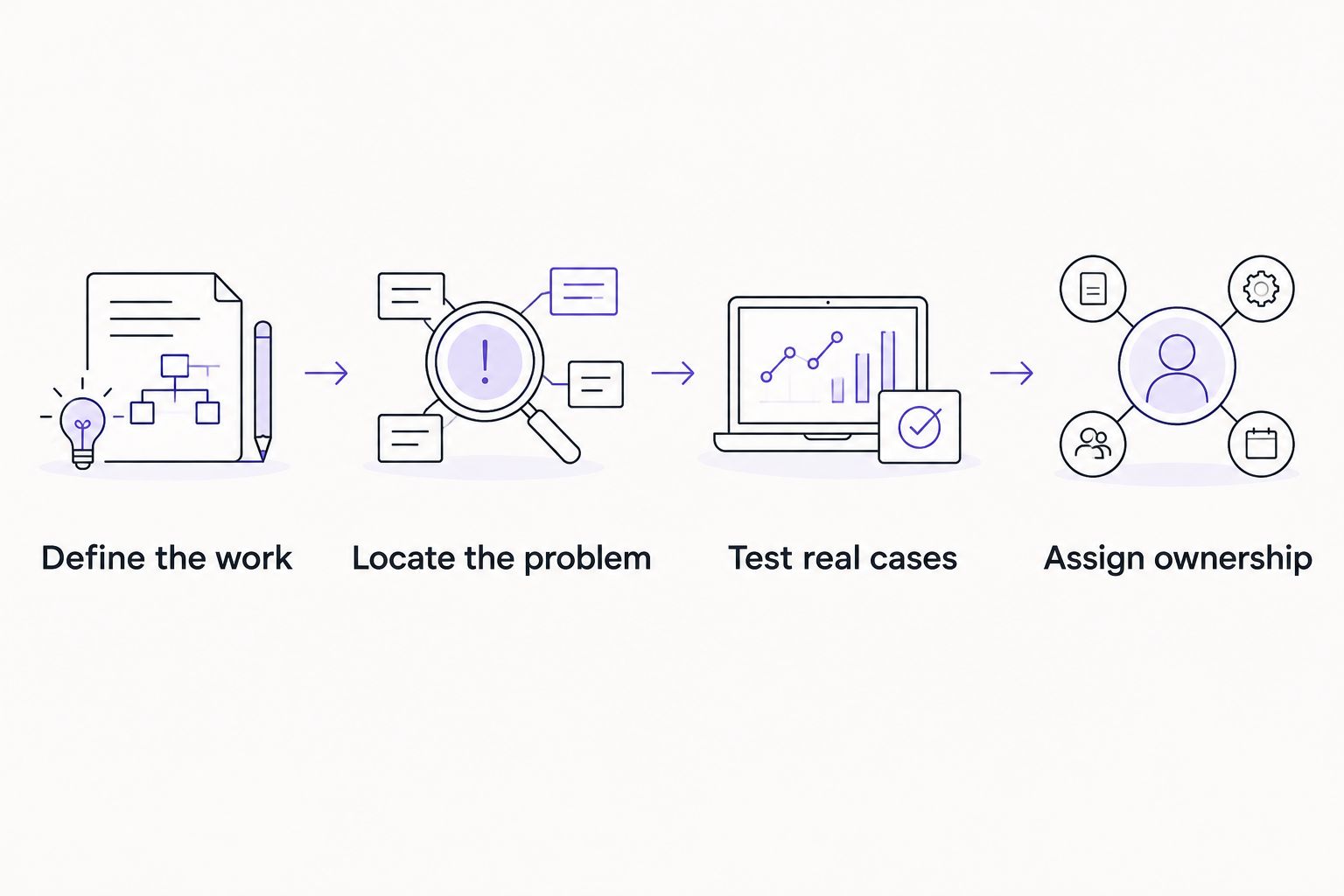
Locate the problem before deciding whether to replace software or automate a workflow.
A useful evaluation brief fits around observable work. It states what enters the process, what must come out, and what happens when the result is wrong. Use that brief for every candidate so the comparison stays consistent.
When staying with Evergent is the right call
Keep Evergent when it meets your subscription billing requirements and the unresolved problem sits elsewhere. Replacing a platform is not the same as fixing a workflow.
Staying also makes sense when an alternative has not demonstrated a necessary requirement. A shortlist is not proof of fit. Preserve the current system until you can explain what the replacement solves and how the transition will be checked.
Your 2026 decision should end with a specific next move: retain the platform, test a replacement, or scope a separate automation project. Do not combine those into an undefined transformation brief.
FAQ
What's the best Evergent alternative in 2026?
The best fit depends on whether you need a billing replacement or workflow automation. Evaluate Zuora, Chargebee, and Recurly for subscription-platform requirements; evaluate a custom development service for repetitive work around existing systems.
Is Arcgent a direct replacement for Evergent?
No. Arcgent is a B2B agency that builds and maintains custom agents inside existing software tools, while Evergent provides subscription billing and revenue management software.
Is Zuora better than Evergent?
There is no universal winner between Zuora and Evergent. Compare both against your actual billing, subscription, and revenue requirements, and require demonstrations of the cases your business must support.
Should I compare Chargebee and Recurly with Evergent?
Yes, if you are evaluating subscription billing or subscription management software. Keep that comparison separate from a brief for custom agent development or managed workflow automation.
Can I automate work without replacing Evergent?
Keeping a billing platform and automating surrounding work are separate decisions. Define the workflow first, then validate access, permissions, supported connections, and human review before approving an implementation.
What should I ask an Evergent alternative to demonstrate?
Ask the provider to demonstrate your real business cases, not a generic example. Include a normal case, an exception, and an incomplete input, with a clear expected result for each.
When should I stay with Evergent?
Stay with Evergent when it meets your subscription billing requirements and the remaining problem is outside that scope. Evaluate the surrounding workflow before committing to a platform migration.
One last thing
Ask every shortlisted provider what happens when an input is wrong. The answer exposes the difference between a successful demonstration and an operating process.
Choose the option that fits the work, then verify the exception path. A billing replacement and a custom automation service should never compete against an undefined requirement.